Aplikacja łączy w jednym miejscu ekspertów, rodziców oraz dzieci. Celem jest uzyskanie kompleksowej informacji o dziecku na podstawie ankiet wypełnianych przez rodzica/rodziców, a także zadań wykonywanych przez dziecko w czterech obszarach rozwojowych. SZOP tworzy indywidualny profil rozwojowy i na jego podstawie proponuje kolejne ćwiczenia dopasowane do potrzeb dziecka, a ekspert/rodzic otrzymuje regularne raporty pokazujące postępy lub regres.
Cztery obszary rozwojowe
Myślenie, uwaga i pamięć
Porozumiewanie się
Relacje
Edukacja szkolna
Kwestionariusz skierowany do rodziców oraz zestaw zadań przeznaczonych dla dzieci obejmują cztery wyodrębnione obszary rozwojowe. W ujęciu praktycznym narzędzie to umożliwia zestawienie informacji przekazywanych przez rodzica na temat funkcjonowania dziecka z wynikami uzyskiwanymi przez dziecko w zadaniach realizowanych online. Takie podejście pozwala na wieloaspektową ocenę rozwoju, łącząc perspektywę obserwacyjną (rodzicielską) z bezpośrednim pomiarem kompetencji dziecka.
Zadania online zostały poddane weryfikacji psychometrycznej na podstawie badań przeprowadzonych na próbie ponad 300 dzieci w wieku od 6 do 9 lat (uczniowie klas 1–3). W toku analiz empirycznych wyeliminowano te pozycje, które nie wykazywały satysfakcjonujących właściwości pomiarowych, w szczególności nie odzwierciedlały badanych wymiarów rozwojowych. W rezultacie uzyskano narzędzie charakteryzujące się większą trafnością i rzetelnością pomiaru.
Istotną zaletą proponowanego rozwiązania jest jego aktualność oraz dostosowanie do środowiska funkcjonowania współczesnych dzieci. Uwzględnienie cyfrowego kontekstu codziennej aktywności sprawia, że pomiar ma bardziej naturalny charakter, a uzyskiwane wyniki lepiej odzwierciedlają rzeczywiste kompetencje dziecka w warunkach, które są mu dobrze znane.
Theoretical Foundations
The scientific framework behind SZOP's assessment methodology
Vygotsky's Zone of Proximal Development
SZOP's adaptive task engine is grounded in Lev Vygotsky's concept of the Zone of Proximal Development (ZPD) — the gap between what a child can achieve independently and what they can achieve with guidance. By continuously calibrating task difficulty to each child's current performance level, the platform ensures that exercises remain optimally challenging, fostering cognitive growth without inducing frustration. This scaffolding principle is fundamental to both the assessment and the remediation components of the system.
Piaget's Cognitive Development Theory
The four developmental domains assessed by SZOP — thinking & attention, communication, relationships, and academic skills — map directly onto Jean Piaget's concrete operational stage (ages 6–12). At this stage children develop logical thought, conservation, and the ability to classify and seriate. SZOP's game-based tasks are designed to probe these emerging capacities in an ecologically valid way, producing richer developmental data than traditional paper-and-pencil tests administered in clinical settings.
Multi-Informant Assessment Approach
A cornerstone of contemporary developmental assessment is the recognition that no single informant captures the full picture of a child's functioning. SZOP implements a multi-informant model, triangulating data from parental questionnaires — reflecting naturalistic observation across home, school, and social contexts — with objective behavioural measures obtained during the child's gameplay. This approach, advocated by Achenbach's empirically based assessment framework, substantially reduces informant bias and increases diagnostic precision.
Executive Function & Attention Research
The thinking, attention, and memory domain is anchored in contemporary executive function (EF) research. EF — encompassing working memory, cognitive flexibility, and inhibitory control — is one of the strongest predictors of academic achievement and social success (Diamond, 2013). SZOP's tasks targeting this domain draw on computerised paradigms analogous to established measures such as the Flanker task and the Corsi block test, adapted for child-friendly delivery within a narrative game environment.
Social-Emotional Learning (SEL) Theory
The relationships domain is informed by the CASEL framework for Social-Emotional Learning. Research consistently shows that self-awareness, social awareness, relationship skills, and responsible decision-making are learnable competencies that predict long-term wellbeing and school success. SZOP assesses these capacities through scenario-based tasks and identifies children who may benefit from targeted SEL interventions, allowing specialists to prioritise support before difficulties escalate into clinical-level problems.
Psychometric Validity & Reliability
SZOP's instruments have been subjected to rigorous psychometric evaluation on a normative sample of over 300 children aged 6–9. Item Response Theory (IRT) analyses were used to eliminate tasks with poor discrimination parameters or insufficient information at target ability levels. The retained items demonstrate satisfactory internal consistency (Cronbach's α > .75 across subscales), test-retest reliability, and convergent validity with established standardised measures, ensuring that the scores generated by SZOP are both meaningful and reproducible.
AI-Driven Developmental Profiling
Beyond static scoring, SZOP applies machine learning models trained on normative developmental trajectories to generate a dynamic developmental profile for each child. Rather than classifying children as simply "above" or "below" age-level, the system identifies pattern-level strengths and vulnerabilities across the four domains — analogous to a neuropsychological profile — and uses these patterns to select the most beneficial next exercises. This closed feedback loop operationalises the principle of data-informed, personalised intervention, a paradigm increasingly supported by intervention science (Kratochwill & Shernoff, 2004) and the emerging field of precision mental health.
Jak działa SZOP?
Rejestracja rodzica
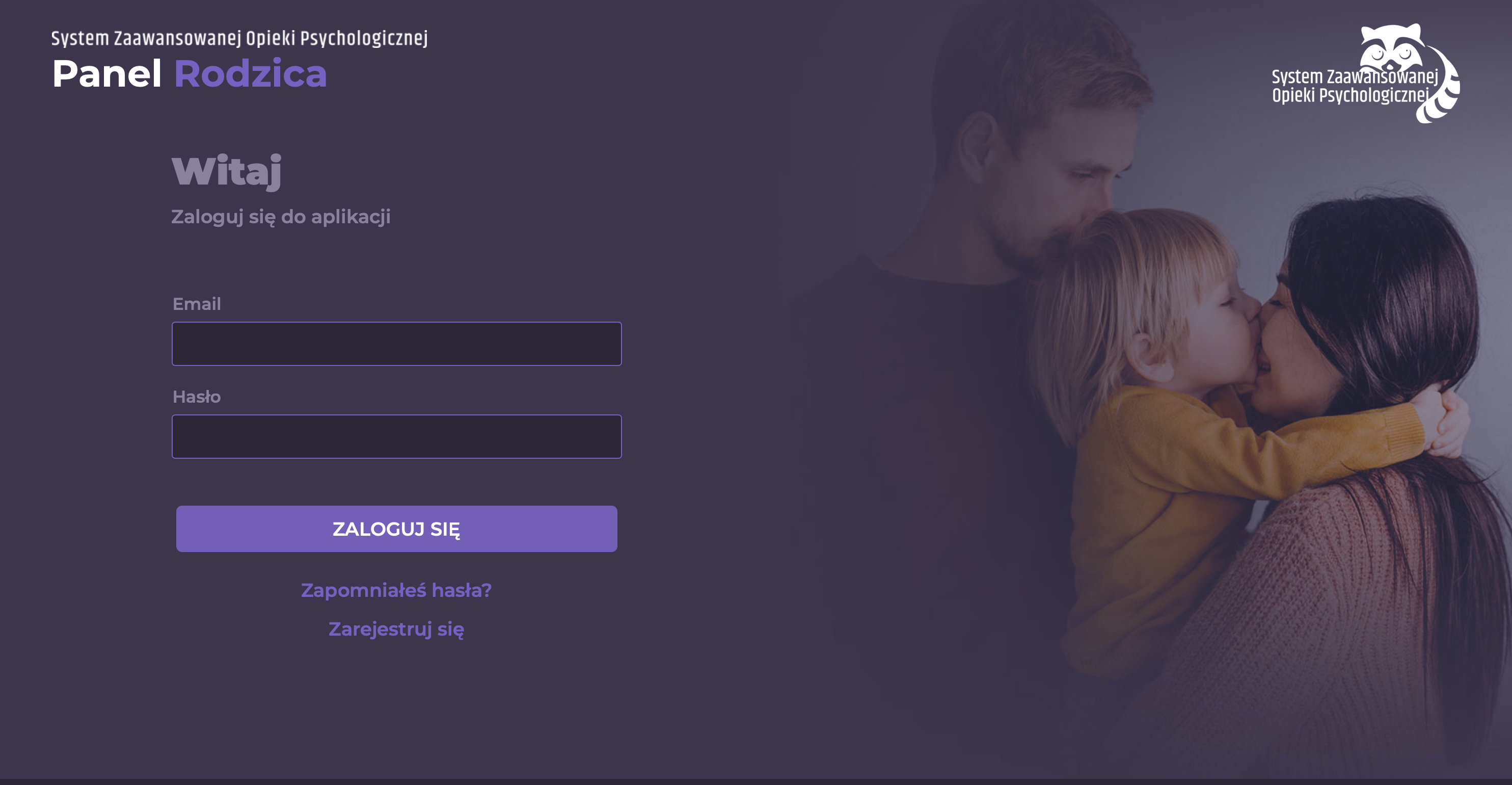
Rodzic (lub oboje rodziców) rejestruje się na platformie rodzic.szop.ai i zakłada konto dla dziecka.
Ankieta rodzica
Rodzic wypełnia szczegółową ankietę dotyczącą rozwoju dziecka. Pytania obejmują wszystkie cztery obszary rozwojowe i pozwalają zbudować wstępny profil dziecka.
Dziecko gra z SZOP
Dziecko loguje się na gra.szop.ai i wykonuje interaktywne zadania zaprojektowane jako angażująca gra. Zadania mierzą rzeczywiste kompetencje dziecka w czterech obszarach.
Raport dla eksperta i rodzica
Po zakończeniu ankiety i gry ekspert na ekspert.szop.ai oraz rodzic otrzymują szczegółowy raport pokazujący, jak dziecko wypada w każdym z czterech obszarów rozwojowych.
Kolejne zadania i monitorowanie postępów
Na podstawie wyników dziecko otrzymuje nowe, dopasowane zadania. Rodzic regularnie otrzymuje raporty śledzące postępy lub regres dziecka, umożliwiając szybką reakcję i wsparcie w odpowiednim momencie.